Infinity vs BodyFriend: Which Massage Chair Line Fits You
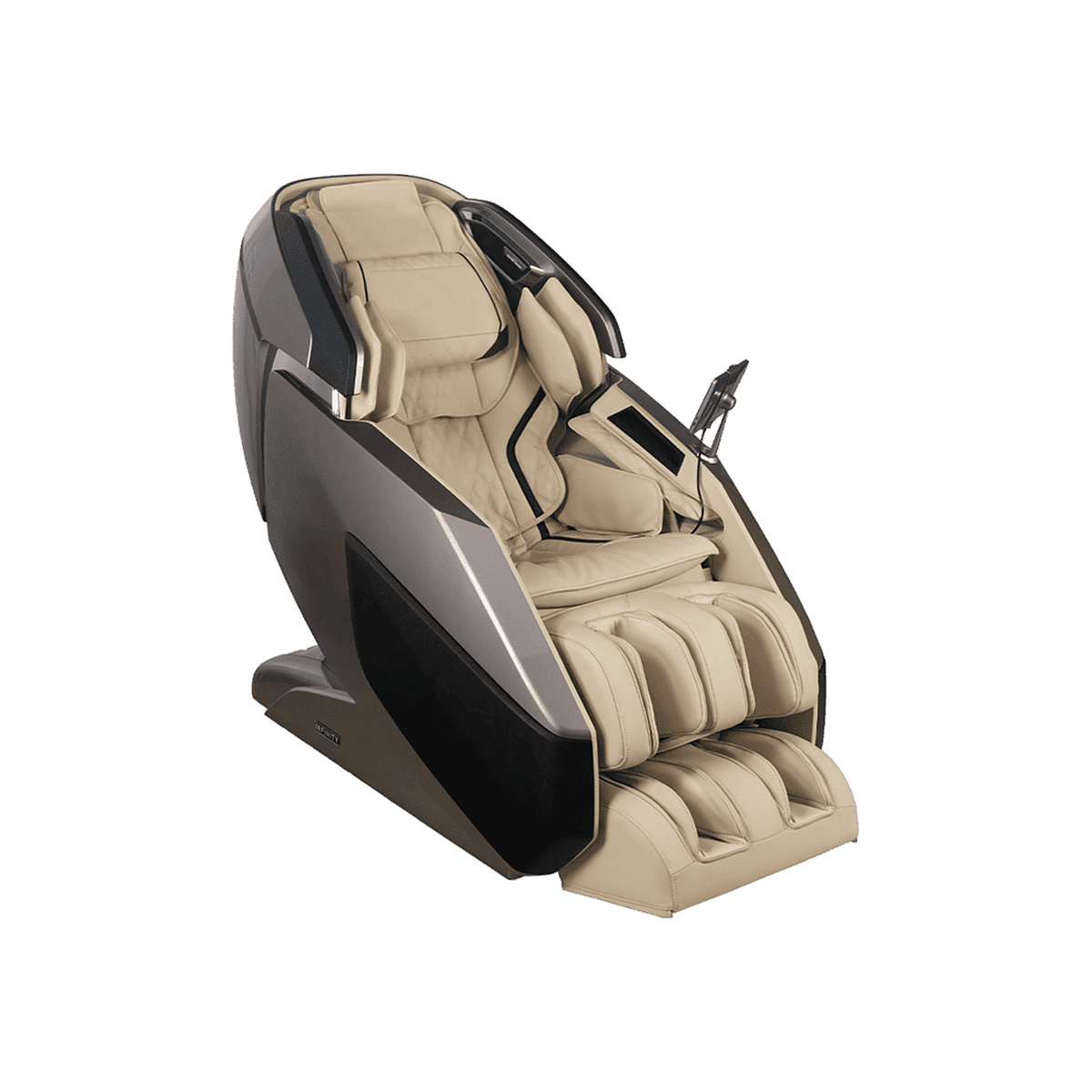
These two brands sit on the same showroom floor and answer almost opposite questions.
Infinity's range is built around what the rollers can do. Most of their chairs run a 4D mechanism, most of them scan your body before the program starts, and nearly all of them put rollers under your feet. If you want to feel a chair adjust to you, this is the line that does it.
BodyFriend's range is built around how the chair lives in your room and how the session feels as an experience. Their catalog carries no 4D chairs and no body scan at all, which sounds like a shortfall until you sit in one. They compete on industrial design, on stretch programs, and at the very top of the range on a level of finish that has no equivalent anywhere else on our floor.
So the honest framing is not which brand is better. It is whether you are buying a massage mechanism or a piece of furniture that also massages you.
The short answer
Infinity competes on mechanism. BodyFriend competes on everything around the mechanism.
Choose Infinity if
You want the rollers to do the work. You care about 4D depth control, you want the chair to scan and adapt, and you want foot rollers. You also want the widest possible choice of price points.
Choose BodyFriend if
You care how the chair looks in your living room, you want strong stretch programs, or you are shopping at the very top of the market where BodyFriend's ceiling sits well above everyone else's.
The rest of this guide shows the figures behind that, taken from our live catalog rather than from either brand's marketing.
Price and range side by side
| Infinity | BodyFriend | |
|---|---|---|
Two things worth noting about any price table in this category. The entry model of a range is rarely a smaller version of the flagship; it is usually a chair with entire systems removed. And the flagship price tells you where a brand thinks its ceiling is, which is a statement about ambition as much as engineering.
Feature counts, from the catalog
These are counts of how many chairs in each brand's line carry the feature, not marketing claims. A brand with a low count is not necessarily worse; it usually means the brand is spending your money somewhere else.
| Feature | Infinity | BodyFriend |
|---|---|---|
Infinity
4D mechanism
4 of 7
Body scan
5 of 7
Heat / thermal
5 of 7
Zero gravity
4 of 7
Stretch program
3 of 7
Foot rollers
6 of 7
Counted from our live catalog, not an editorial score.
BodyFriend
4D mechanism
0 of 10
Body scan
0 of 10
Heat / thermal
4 of 10
Zero gravity
4 of 10
Stretch program
7 of 10
Foot rollers
0 of 10
Counted from our live catalog, not an editorial score.
Read the ratio, not the raw number. A brand with 4 of 7 chairs running 4D is making a different statement than one with 0 of 10, and range size changes what those numbers mean.
What Infinity is actually built around
Infinity carries 7 chairs on our floor, from $4,999 to $16,999. 4 of them run a 4D mechanism, meaning roller depth can change during a stroke rather than only in and out. 5 scan your body before the program starts, so the rollers know where your shoulders actually are. 5 include heated or thermal elements. 6 put rollers under the feet, which is the feature people underestimate until they try it.
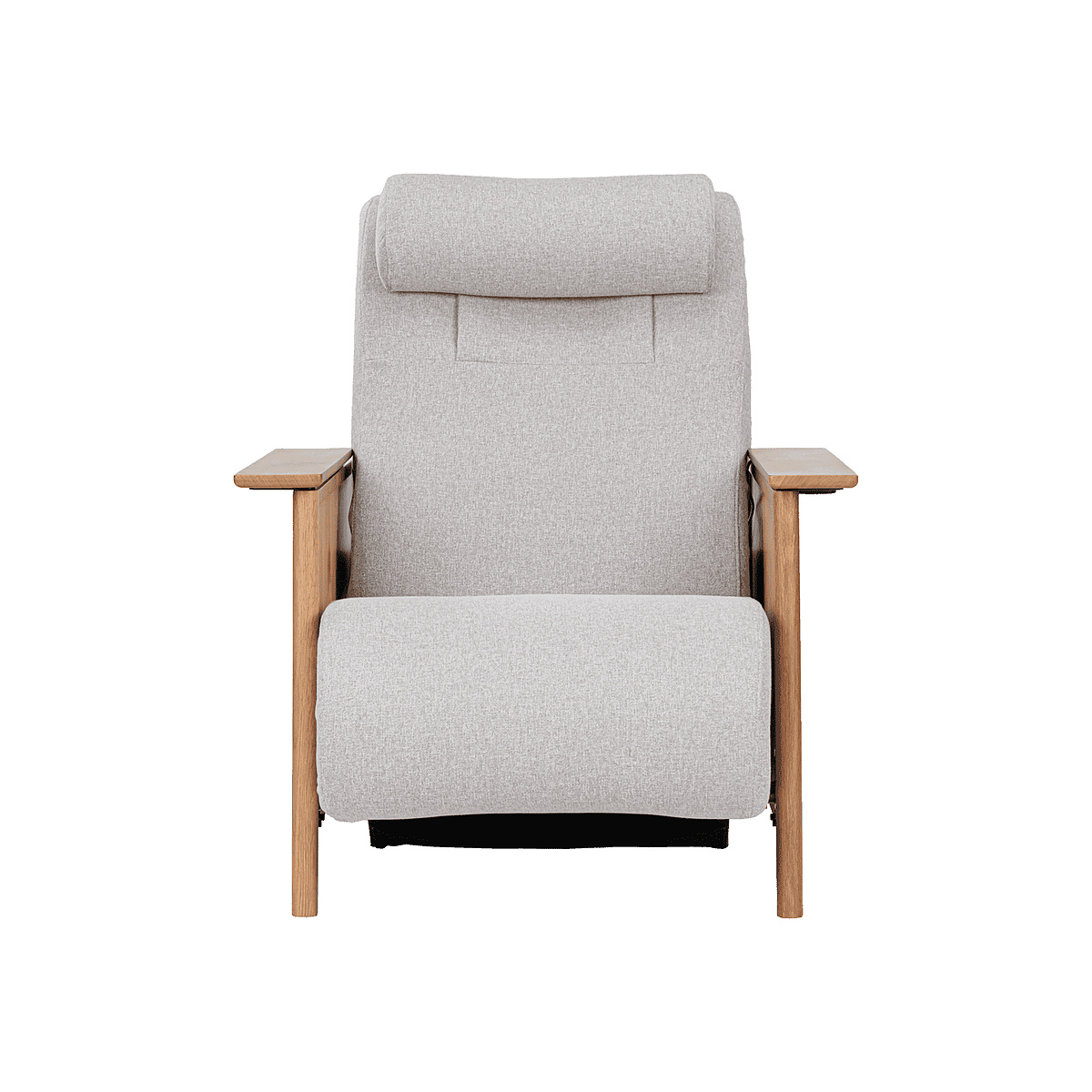
The Restora Chair
$4,999
View details →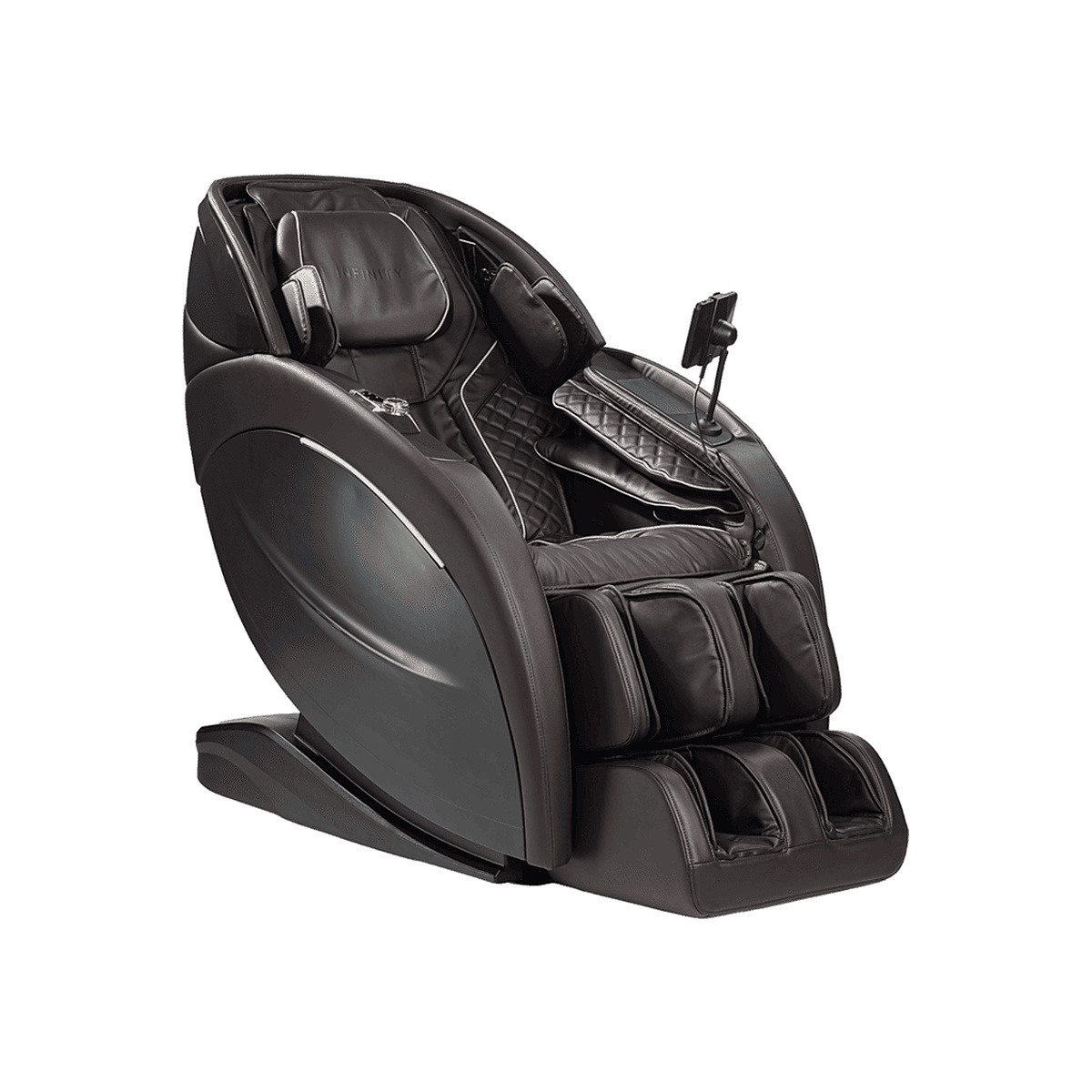
Aura Elite 4D Massage Chair
$9,499
4DHeat
View details →
Ultra Imperial Syner-D Massage Chair
$16,999
Body scan
View details →Full model-by-model detail is in our Infinity guide, and the Infinity brand page lists current stock.
What BodyFriend is actually built around
BodyFriend carries 10 chairs, from $3,500 to $15,000. No 4D chairs in the line. Worth saying plainly because spec-sheet shoppers treat this as disqualifying, and on a showroom floor it often is not. No body scan in the line. 4 include heated or thermal elements. 7 include a dedicated stretch program.
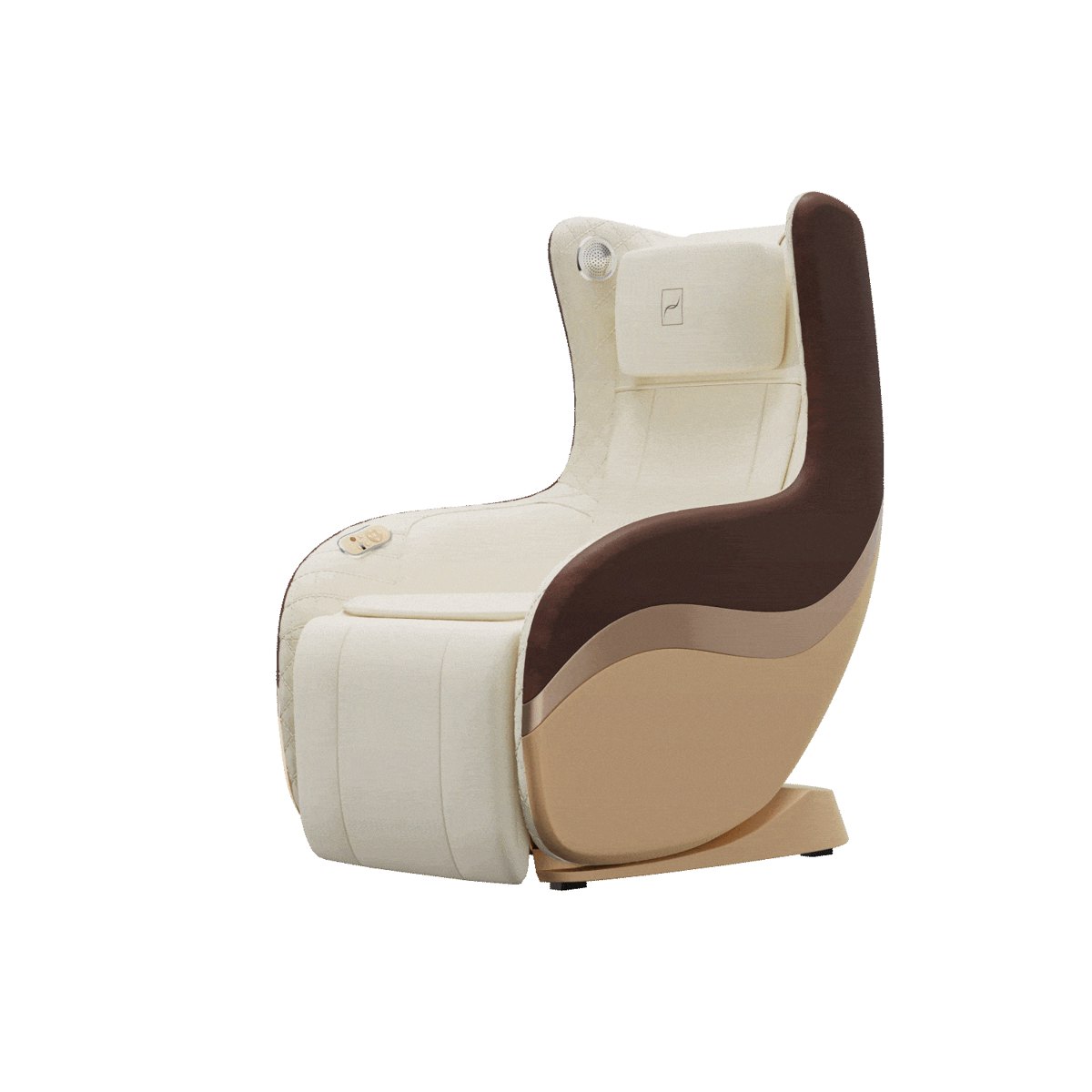
BodyFriend Eliza
$3,499.99
View details →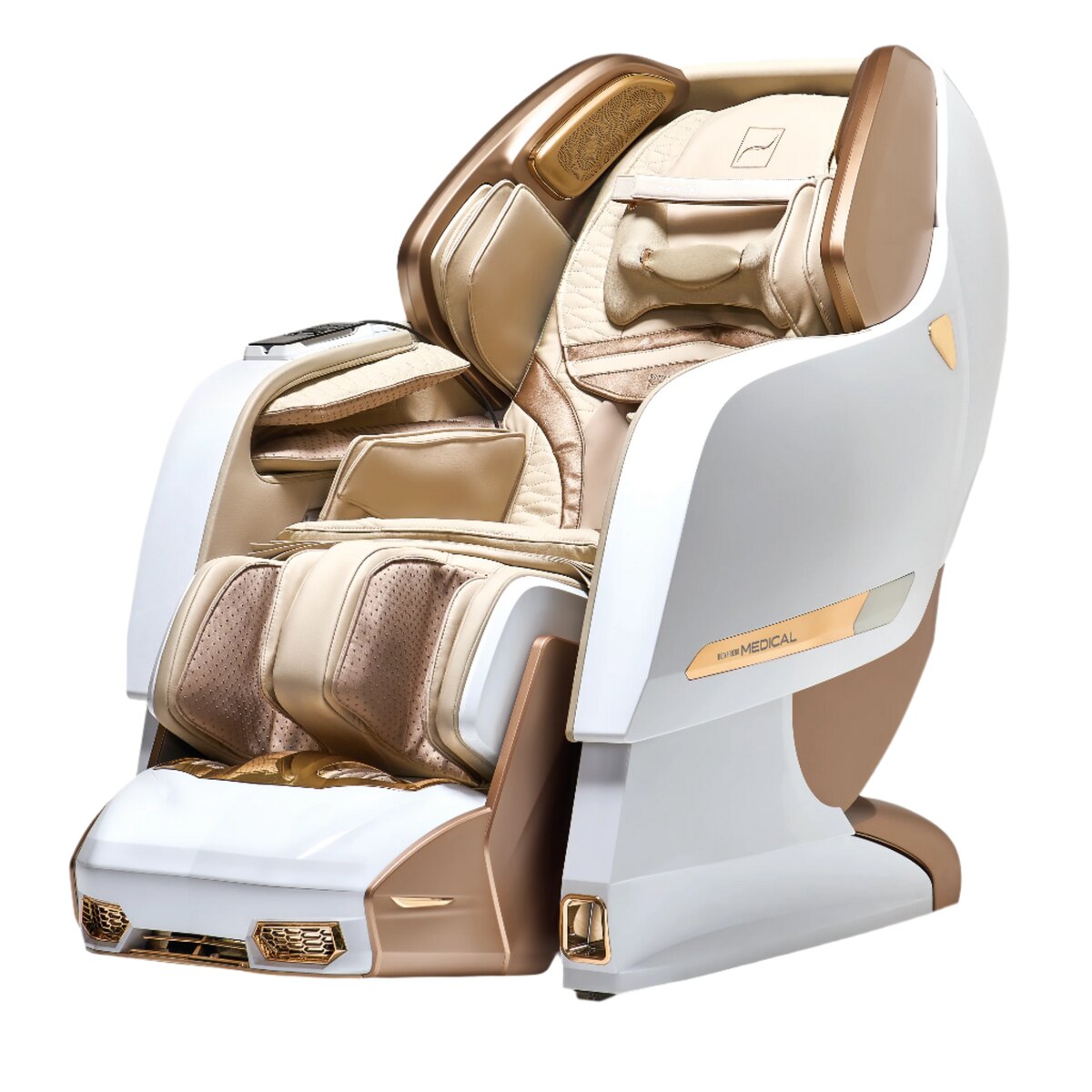
BodyFriend Medical Phantom
$10,799 $13,999
Heat
View details →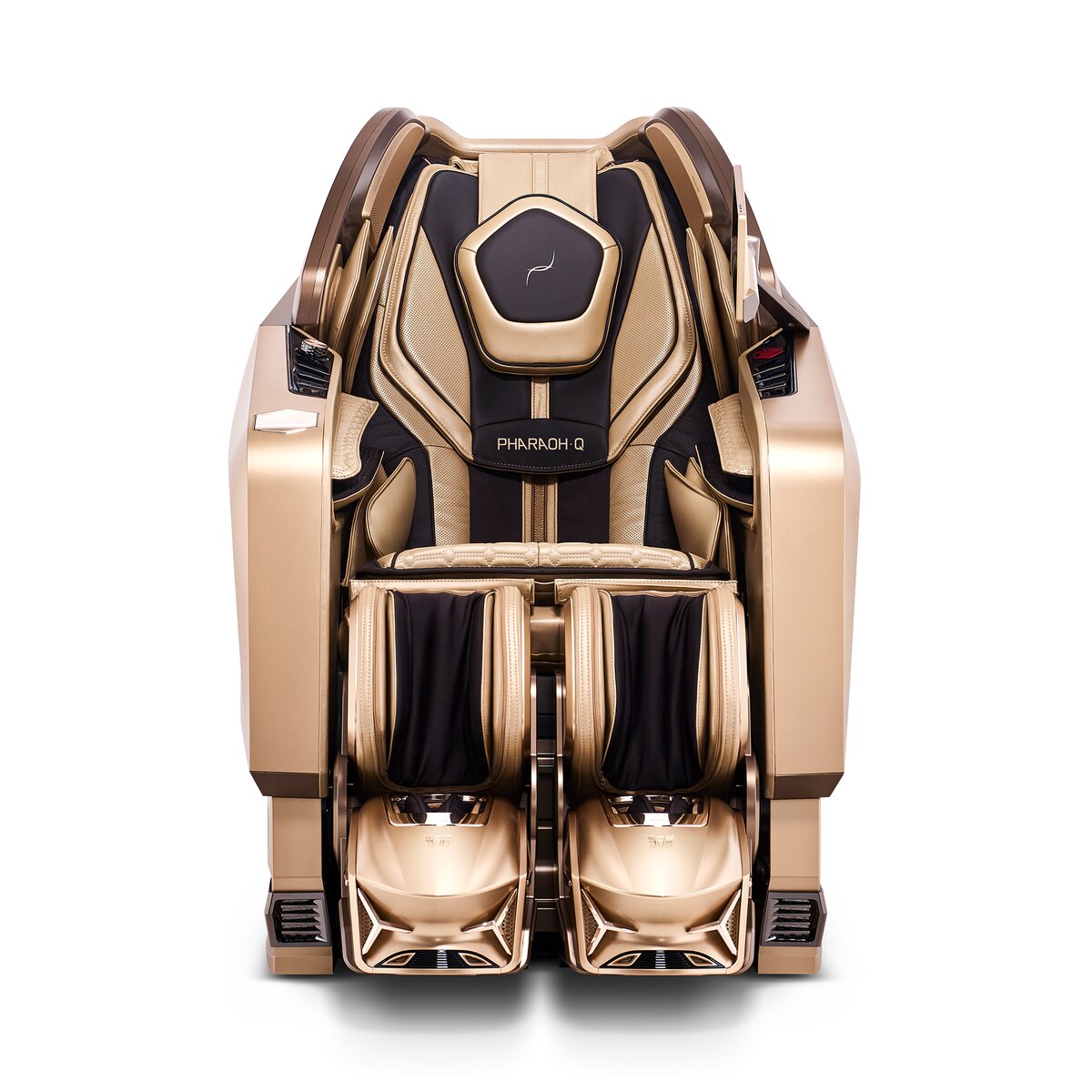
BodyFriend Pharaoh Q
$15,000 $17,000
Heat
View details →Model detail is in our BodyFriend guide, and the BodyFriend brand page shows what is in stock.
Every Infinity chair on our floor
This is the whole line, priced high to low, with the four features buyers ask about most. A dash means the feature is not described in that chair's published specification, which is not the same as it being absent; where our data is thin we leave it blank rather than guess.
| Model | Price | 4D | Body scan | Heat | Foot rollers |
|---|---|---|---|---|---|
Notice that 4D is not universal within the line. That is the single most common surprise in this category: buyers assume the brand is 4D because the flagship is, then buy three rungs down and wonder why the depth control feels different. Check the specific model, not the brand.
Every BodyFriend chair on our floor
| Model | Price | 4D | Body scan | Heat | Foot rollers |
|---|---|---|---|---|---|
The consistency across this line means your decision is about size and finish more than mechanism.
Fit limits, where the manufacturers publish them
Fit is the most common cause of buyer's remorse in this category and the least discussed. These are the published maximums for the models where the manufacturer states them. Where a row is missing, the figure is not in our data and we will confirm it for you rather than estimate.
| Model | Brand | Max user height | Max user weight |
|---|---|---|---|
Two things to know about these numbers. A stated maximum is where the chair still works, not where it works well; if you are within an inch or two of a limit, sit in that specific chair before buying. And height limits matter more than weight limits for comfort, because the shoulder airbags and neck rollers are positioned for a range, and being outside it means the massage lands in the wrong place no matter how strong it is.
Where the two ranges actually overlap
Both brands have chairs between $4,999 and $15,000. That band is where this comparison stops being theoretical, because it is where you will genuinely be choosing one over the other with the same money in hand.
In that band: 6 Infinity chairs against 8 BodyFriend chairs.
The two are evenly matched inside the overlap, which is exactly the situation where sitting in both is the only way to decide.
Outside that band the comparison resolves itself. Below $4,999 and above $15,000 only one of the two brands has a chair, so the question answers itself on price alone.
Which one, for your specific problem
Most comparisons answer "which brand is better." That is the wrong question. This table answers "which one, given what is actually bothering you." Every row is decided by a catalog count, not by our preference, and where the two are close we say so instead of forcing a winner.
| Use case | If your priority is | Start with | Why |
|---|---|---|---|
Where the spec sheet stops helping
Every comparison in this category hits the same wall, and it is worth naming.
Roller depth that reads as firm to one person reads as painful to another. A 4D mechanism you never take past its second depth setting is an expensive feature you are not using. Heat that feels essential to someone with a stiff lower back feels irrelevant to someone whose problem is their shoulders. And fit matters more than any of it: a chair that is excellent for someone five foot four can be misaligned for someone six foot two, because the shoulder airbags land in the wrong place.
None of that is in the tables above, and none of it can be. It is the reason we keep every chair on the floor plugged in.
Which one to sit in first
If you are coming in to decide between these two, do this in order.
Sit in the Infinity first for ten minutes on a full program, not a demo cycle. Demo cycles are tuned to impress in ninety seconds and tell you nothing about how the chair feels at minute eight.
Then sit in the other one and run the same body part. Comparing shoulders to shoulders on two brands within a few minutes is the single most useful thing you can do, and it is the thing you cannot do online or across two showrooms on different days.
Pay attention to where the rollers land on your neck, whether the calf section reaches your calves, and how the chair feels as it comes out of recline. Those three things predict daily satisfaction better than any feature count.
Frequently asked questions
Is Infinity better than BodyFriend?
Neither is better in general. Infinity competes on mechanism. BodyFriend competes on everything around the mechanism. The right answer depends on whether you are buying mechanism depth, thermal therapy, design, or range of choice. The tables above show what each brand actually puts in its chairs so you can decide against your own priorities.
Which one is cheaper?
On average, Infinity at $10,542 against BodyFriend at $9,680. But the ranges overlap, so the more useful comparison is entry model against entry model: $4,999 for Infinity against $3,499.99 for BodyFriend.
Does Infinity have 4D chairs?
Yes, 4 of 7 chairs in the Infinity line run a 4D mechanism.
What about the warranty?
Infinity: 5 Yr Frame-3 Yr Parts-1 Yr Labor. BodyFriend: our listings do not carry written warranty terms, so we will not publish a number we cannot show you. The tiers matter more than the headline figure, and our warranty guide explains why frame coverage is the least useful number on any brochure.
Which one is better if I am tall?
Height limits are published per model, not per brand, so the brand-level answer is misleading. Check the fit-limits table above for the specific chairs you are considering, and treat a stated maximum as the point where the chair still works rather than where it works well. If you are within an inch or two of a limit, sitting in that exact chair is not optional.
Do I actually need 4D, or is 3D enough?
3D rollers move in and out. 4D adds control over the speed and depth of the stroke itself, so the chair can press and release rather than just press. It is a real difference and it is also one many owners never use past the second setting. If you are unsure, sit in a 4D chair and take it past what feels comfortable; if the extra range feels useful rather than alarming, it is worth paying for.
Is heated therapy worth paying for?
It depends entirely on what hurts. Heat helps most with stiffness, particularly a lower back that is worst in the morning. It does far less for the kind of shoulder and neck tension that responds to pressure. This is the clearest example of why the same chair earns very different reviews from two people.
How much space do I need?
More than most buyers expect, and it varies widely by model rather than by brand. Every reclining chair needs wall clearance to reach full recline, and forcing a chair into a space that is too tight loads the track in ways the warranty does not cover. Ask for the clearance figure of the exact model and measure before you commit.
Can I buy either brand cheaper online?
Sometimes, and it is the most expensive mistake in this category. Manufacturer coverage runs through the authorized dealer network. A chair bought from an unauthorized reseller or imported outside that network often carries no enforceable US warranty regardless of what the listing says. We are an authorized dealer for both brands, which is what makes the warranty terms above enforceable.
What happens if the chair needs service?
We service the brands we carry in-house, which is the reason we carry a short list of brands rather than nine. Every brand on our floor is a brand we can fix. Ask any multi-brand retailer which of their brands they can service themselves; the answer is often shorter than the list on the door.
Can I try both in the same visit?
Yes, and you should. Both brands are on one floor at our San Jose showroom, plugged in and ready, with no appointment required.
Come sit in both
This is the comparison that spec sheets settle least well. Our showroom keeps Infinity and BodyFriend on the same floor so you can run the same program on both within a few minutes and feel the difference instead of reading about it.
Ten minutes in the chair: what to check
- Shoulder alignment. The airbags should land on your shoulders, not your ears or your upper arms. This is the single most common fit failure and you feel it in the first thirty seconds.
- Neck roller height. Ask the chair to run its neck program. If the rollers sit below where it actually hurts, no amount of intensity will fix it.
- Back roller depth. Take it past the setting you think you want. A chair that feels perfect at maximum has no headroom on a bad day.
- Calf reach. Your calves should sit in the calf section, not above it. Taller users get caught here more than anywhere else.
- Foot rollers. Some people love them and some cannot tolerate them. Ten seconds tells you which one you are.
- Recline and return. How the chair comes out of zero gravity matters as much as how it goes in. A jerky return gets annoying by week three.
- Wall clearance. Ask how much space it needs fully reclined, then measure your room before you commit.
- Remote and controls. If you cannot start your favourite program in two taps, you will stop using it.
- Noise at full power. Quiet in the showroom is not the test. Run it hard and listen, especially if the chair will live in a shared room.
- Getting in and out. Try it the way you will at home: tired, at the end of the day, without thinking about it.
Browse the full catalog first if you want to narrow to specific models, or just come in and tell us where your body hurts.
The best comparison happens in the chair.
Both brands are on one floor in San Jose, plugged in, no appointment needed.