BodyFriend vs Fujiiryoki: Who Owns the Heritage
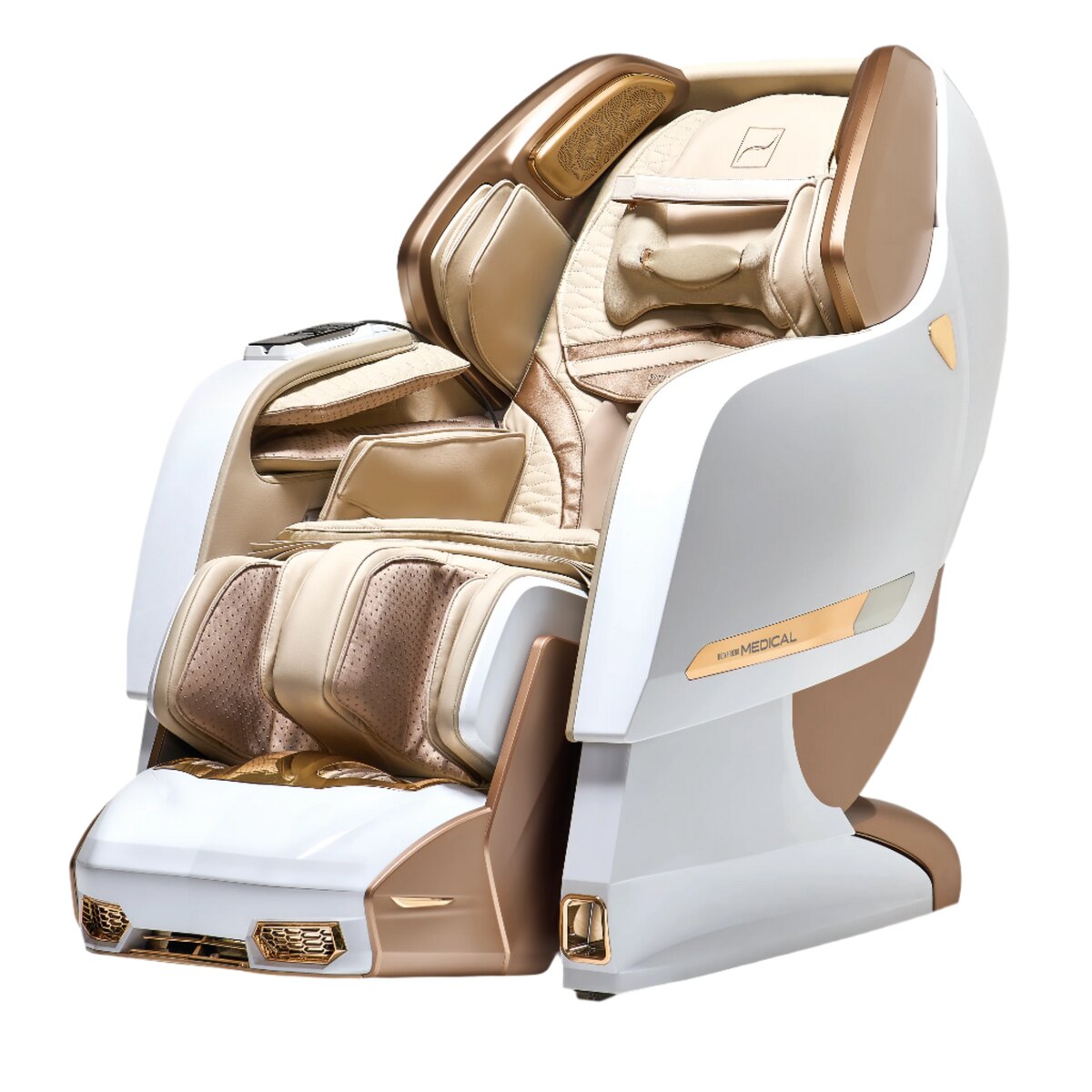
One of these brands sells history. The other does not have any and does not pretend to.
Fujiiryoki's lineage is genuine and it is the best in the category: Osaka, 1954, recognised by Japan's own mechanical engineering society. What has changed is who owns it.
BodyFriend was founded in 2007 and makes no historical claim at all. What it offers instead is measurable and specific. Across the 11 chairs we carry, not one has a 4D mechanism, not one has rollers under your feet, and not one scans you. 7 of 11 run a dedicated stretch program, and the engineering signature is a leg mechanism that drives each leg independently instead of fixing both in one footrest.
So this is a choice between a brand whose value proposition is seventy years of mechanism refinement, and a brand whose value proposition is that it looks and feels like furniture you chose. Heritage is a real reason to buy. It is just worth knowing whose heritage it currently is.
Where these figures come from, before the detail. We are an authorized BodyFriend dealer, so everything on the BodyFriend side is our own catalog with live pricing, and the chairs are on our San Jose floor. We do not sell Fujiiryoki. Everything on the Fujiiryoki side is what Fujiiryoki or its own distributor publishes. Where nobody publishes a figure, we leave it out rather than estimate it.
Japanese heritage, Taiwanese ownership, and mixed manufacture
Fujiiryoki sells a 1954 Osaka lineage. The ownership behind it has changed twice in a decade, and since 2022 the company has been wholly owned by Johnson Health Tech, a Taiwanese group listed in Taipei whose other brands include Matrix, Horizon, BowFlex and Schwinn.
That is not a criticism. Plenty of excellent companies have foreign owners. But if the heritage is part of what is being sold to you, the current structure is part of the picture too.
Manufacture is where it gets genuinely complicated, and this is the detail we would want if we were buying. Fujiiryoki's US store states that its chairs are designed and manufactured in Japan. Its own made-in-Japan page does not actually say that any specific model is built there; it talks about conforming to each market's local production standards, which implies the opposite. Meanwhile specialist retailers separate the line explicitly: the flagship Cyber-Relax Ai is described as genuinely built in Japan while others are Japan-designed, and at least one model is reported as Chinese-built.
We could not find a model-by-model statement of origin from the manufacturer. So if Japanese manufacture is part of why you are buying, ask about the specific model in writing and do not accept a brand-level answer.
Two practical notes. The range runs two parallel naming schemes, JP and MR, which makes the line harder to navigate than it should be, and the same official storefront also sells Synca and D.Core, so three brands share one window.
What BodyFriend measurably carries
These are counts from our live catalog rather than marketing copy, and they move when the catalog moves. BodyFriend has 11 chairs on our floor, $3,500 to $15,000. Of those, 0 run a 4D mechanism, 0 put rollers under your feet, 2 use a long track, 5 include heat, 0 scan you before the program starts and 7 have a dedicated stretch program.
That is the whole line, not a selection. Model-by-model detail is in our BodyFriend guide.
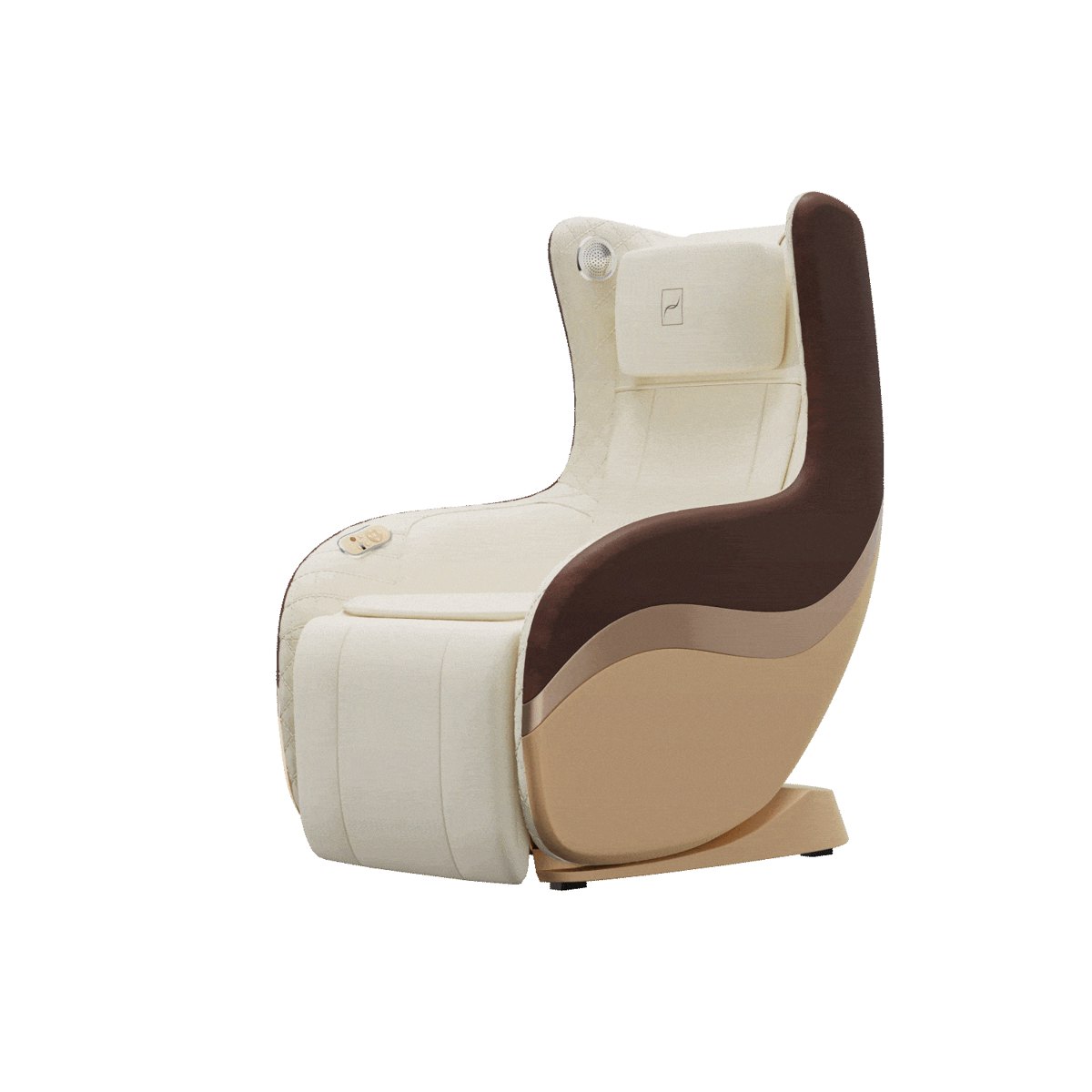
BodyFriend Eliza
$3,499.99
View details →BodyFriend Medical Phantom
$10,799 $13,999
Heat
View details →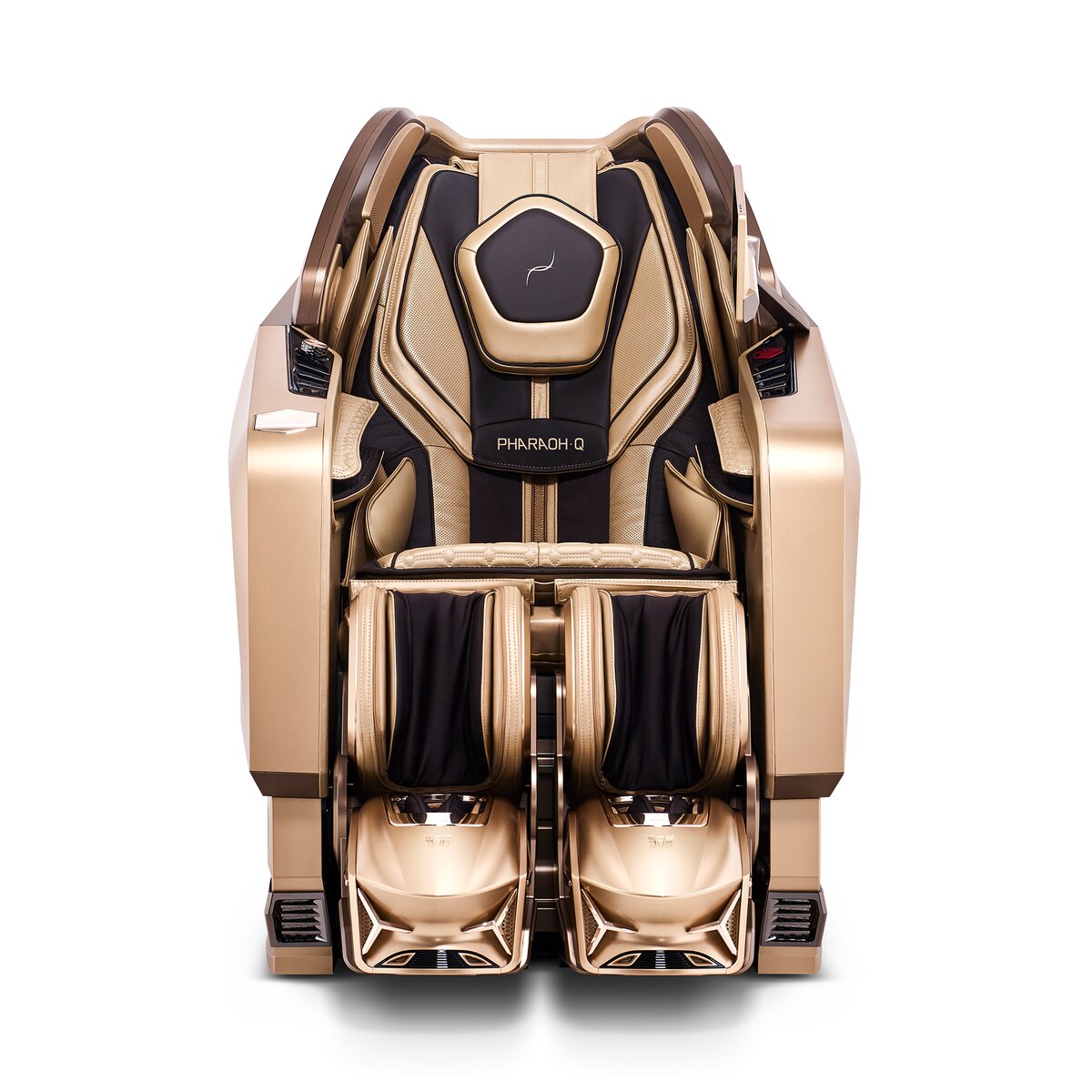
BodyFriend Pharaoh Q
$15,000 $17,000
Heat
View details →Which one, for your specific problem
| If your priority is | Where we would point you |
|---|---|
Seventy years of heritage, stated carefully
Fujiiryoki has the strongest origin story in the category. In 1954 in Osaka, Nobuo Fujimoto built the first Fuji automatic massage machine from a bicycle chain, a car steering wheel and rubber baseballs as rollers, and Japan's own mechanical engineering society recognises it as heritage.
The precise claim is the world's first mass-produced massage machine, not the first ever; electrically powered massage devices existed decades earlier. Fujiiryoki's US store states the larger version and says it invented the world's first massage chair.
The commercial detail most people never hear: the first customers were public bathhouses, where bathers paid a coin for a three-minute session. The category began as coin-operated commercial equipment.
One more thing about Fujiiryoki
Fujiiryoki runs two parallel model naming schemes and shares its official storefront with two other brands.
That is not the reason we wrote this page, but it is the kind of detail that surfaces after the money has moved rather than before.
What we would want in writing first
We sell one of these brands and not the other, so read this as a dealer's checklist rather than a neutral review.
- Ask whether your address falls inside the 150-mile radius of an authorized service provider. Outside it, the warranty is a document rather than a technician.
- Ask for the warranty durations in writing. Fujiiryoki's official page publishes coverage but no time periods.
- Ask where your specific model is manufactured. Japanese manufacture is not uniform across the range and there is no model-by-model statement.
- Confirm which brand you are buying. The same official storefront also carries Synca and D.Core.
- If the unit is refurbished, ask how the warranty differs from new. The official store sells both.
The part no comparison page can settle
Roller depth that reads as firm to one person reads as painful to another, and fit decides more than any specification on either side of this page. We can be straight about the asymmetry here: one of these brands you can sit in on Saratoga Avenue this week, the other you would be judging from a screen. In this category that is a worse way to buy, and it is worth saying even though it happens to favour us.
Ten minutes in the chair: what to check
- Shoulder alignment. The airbags should land on your shoulders, not your ears or your upper arms. This is the single most common fit failure and you feel it in the first thirty seconds.
- Neck roller height. Ask the chair to run its neck program. If the rollers sit below where it actually hurts, no amount of intensity will fix it.
- Back roller depth. Take it past the setting you think you want. A chair that feels perfect at maximum has no headroom on a bad day.
- Calf reach. Your calves should sit in the calf section, not above it. Taller users get caught here more than anywhere else.
- Foot rollers. Some people love them and some cannot tolerate them. Ten seconds tells you which one you are.
- Recline and return. How the chair comes out of zero gravity matters as much as how it goes in. A jerky return gets annoying by week three.
- Wall clearance. Ask how much space it needs fully reclined, then measure your room before you commit.
- Remote and controls. If you cannot start your favourite program in two taps, you will stop using it.
- Noise at full power. Quiet in the showroom is not the test. Run it hard and listen, especially if the chair will live in a shared room.
- Getting in and out. Try it the way you will at home: tired, at the end of the day, without thinking about it.
Frequently asked questions
Do you sell Fujiiryoki?
No. We are an authorized dealer for BodyFriend, Infinity, Kyota, Ceragem, Daiwa and Chanenn, and we service those brands ourselves. We wrote this because people ask us about Fujiiryoki, and a straight answer is more useful than pretending the brand does not exist.
Who owns Fujiiryoki now?
Johnson Health Tech, a Taiwanese group, has owned it outright since 2022. The same group owns Matrix, Horizon, BowFlex and Schwinn. The 1954 Osaka heritage is real; the current ownership is part of the same picture.
Are Fujiiryoki chairs made in Japan?
Not uniformly. The company's US store says designed and manufactured in Japan, while its own made-in-Japan page does not state that any specific model is built there, and specialist retailers separate the flagship as genuinely Japan-built from others described as Japan-designed. We could not find a model-by-model statement from the manufacturer, so ask about your exact model in writing.
Would buying one online void the warranty?
Manufacturer coverage in this category runs through the authorized network whichever brand you pick, and a chair bought outside it often carries no enforceable US warranty no matter what the listing promises. Verify the seller's status before you pay, not after. Our warranty guide explains how the tiers work and which numbers actually matter.
Come and sit in the ones we do carry
The best comparison happens in the chair.
Both brands are on one floor in San Jose, plugged in, no appointment needed.