Kyota vs Osaki: Two Japanese-Sounding Names
We should start by admitting something, because the alternative is being caught out in the first comment.
Kyota is a Japanese-sounding name and Kyota is not a Japanese manufacturer. Our own brand description says Japanese-inspired rather than Japanese-made, and that wording is deliberate. We are not going to criticise a competitor for something we would have to excuse in our own range.
Osaki is also a Japanese-sounding name. The company behind its warranty is Titan Chair LLC in Carrollton, Texas, and retailer sources put roughly ninety percent of production in China. The models genuinely built in Japan carry JP in the name.
The difference worth arguing about is precision, not origin. Most chairs sold in America are Chinese-built, including ones we sell, and saying so plainly costs nothing.
Which leaves the actual engineering, and here there is one measured fact that separates these two more than any name does. Every single Kyota chair we carry, all 8 of them, has rollers under your feet. 6 of 8 also run 4D. No other brand on our floor is that consistent, and foot rollers are the feature owners most often say they underestimated.
Where these figures come from, before the detail. We are an authorized Kyota dealer, so everything on the Kyota side is our own catalog with live pricing, and the chairs are on our San Jose floor. We do not sell Osaki. Everything on the Osaki side is what Osaki or its own distributor publishes. Where nobody publishes a figure, we leave it out rather than estimate it.
A Japanese-sounding name on a Texas company
Osaki reads as a Japanese brand and it is not one.
The legal entity behind the warranty is Titan Chair LLC, based in Carrollton, Texas. The same group also trades as OTA World LLC, and retail warranty documents carry a third name, Osaki Massage Chair LLC. Whether that matters day to day is debatable; it matters a great deal the first time you need to work out who you are actually dealing with.
Manufacture follows the same pattern. Retailer sources put roughly ninety percent of Osaki production in China, with the remainder in Taiwan and Japan. The chairs that genuinely are built in Japan carry JP in the model name and cost noticeably more, which is a useful shortcut: if the model name has no JP in it, do not assume Japanese assembly.
We should be fair here, because this cuts close to home. The large majority of massage chairs sold in America are made in China, including chairs we sell. The criticism is not the country. It is the gap between what the name suggests and what the company is. For what it is worth, our own Kyota description says Japanese-inspired rather than Japanese-made, and that distinction is the whole point.
What Kyota measurably carries
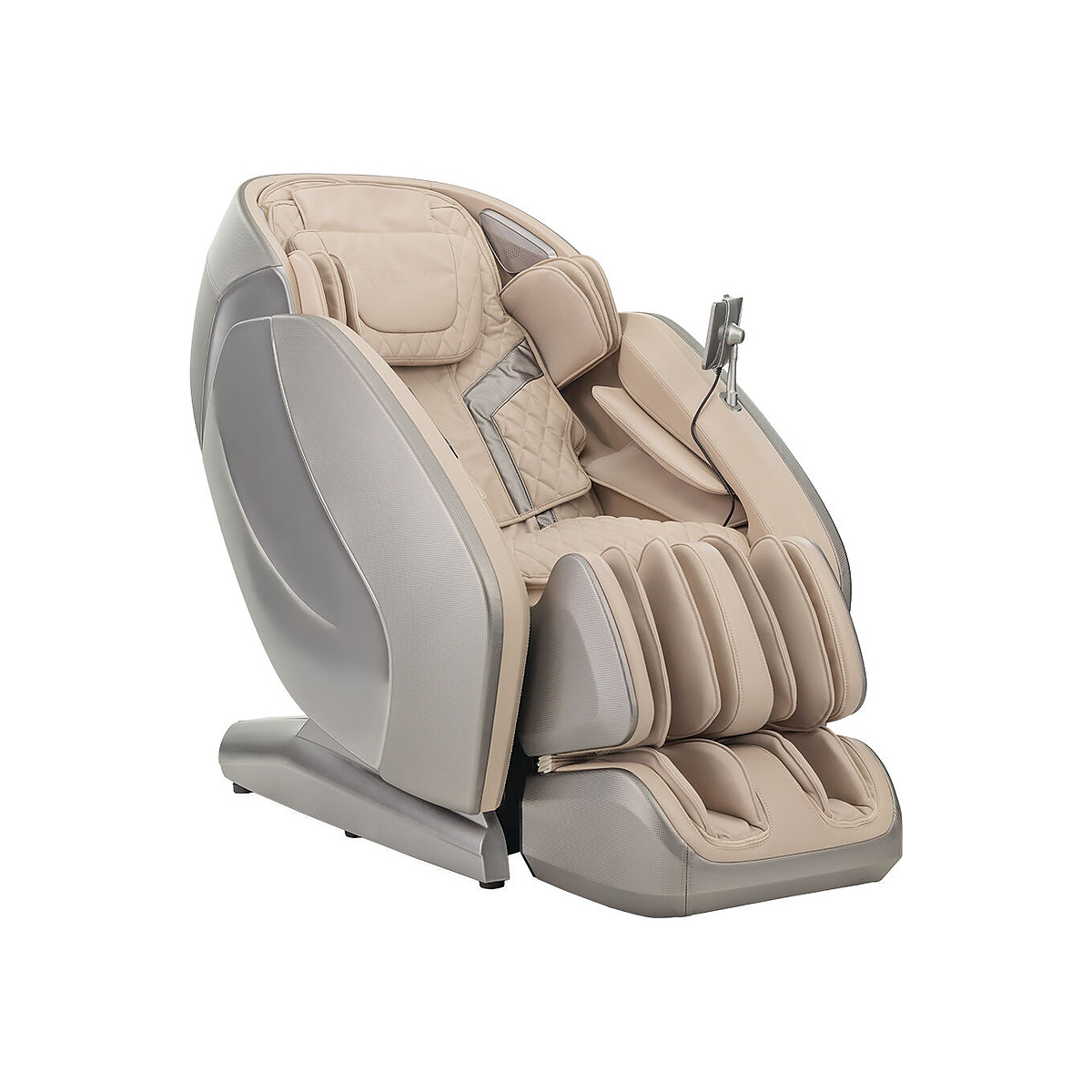
These are counts from our live catalog rather than marketing copy, and they move when the catalog moves. Kyota has 8 chairs on our floor, $2,799 to $12,999. Of those, 6 run a 4D mechanism, 8 put rollers under your feet, 3 use a long track, 5 include heat, 3 scan you before the program starts and 1 have a dedicated stretch program.
That is the whole line, not a selection. Model-by-model detail is in our Kyota guide.
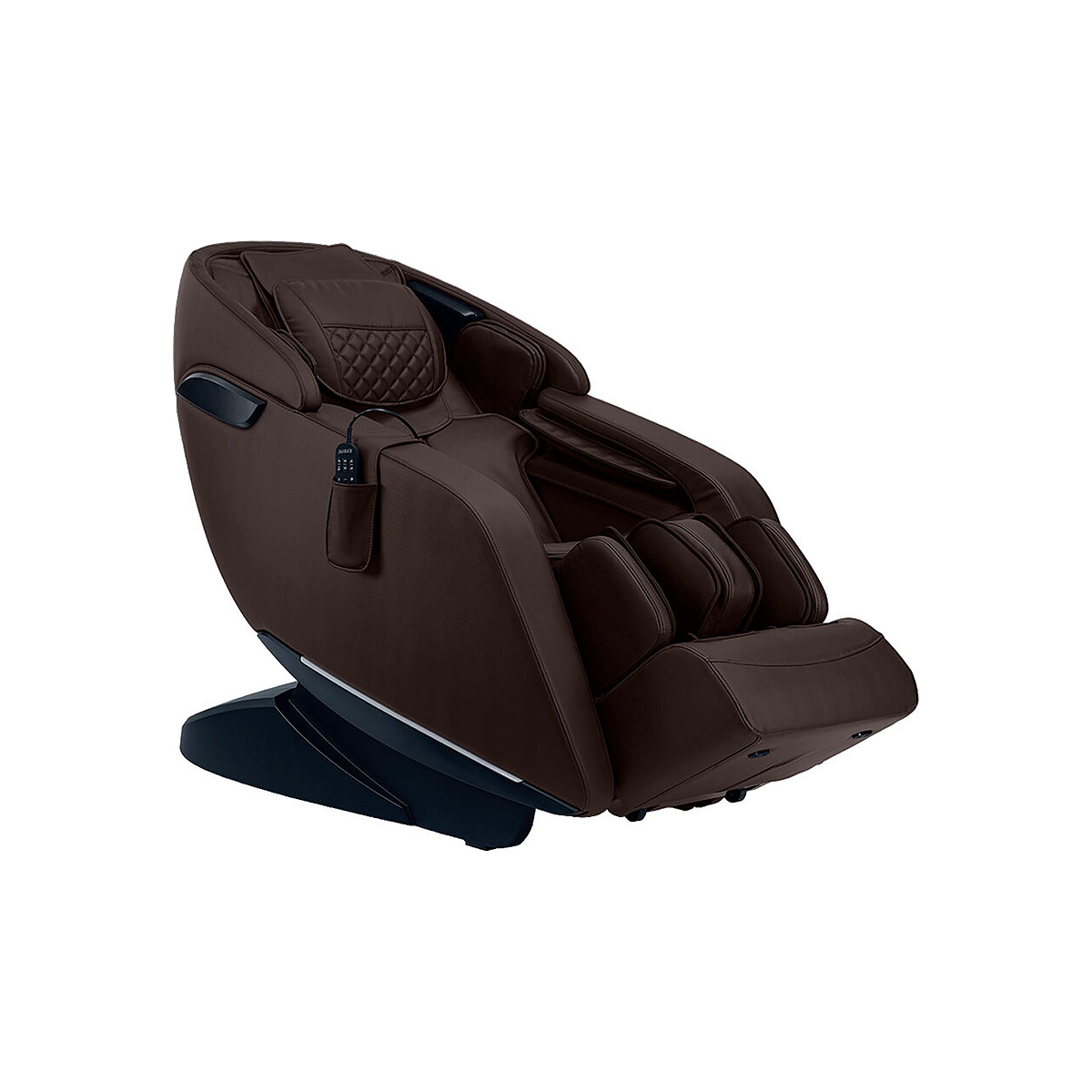
Kyota Genki M380 Massage Chair
$2,799 $7,999
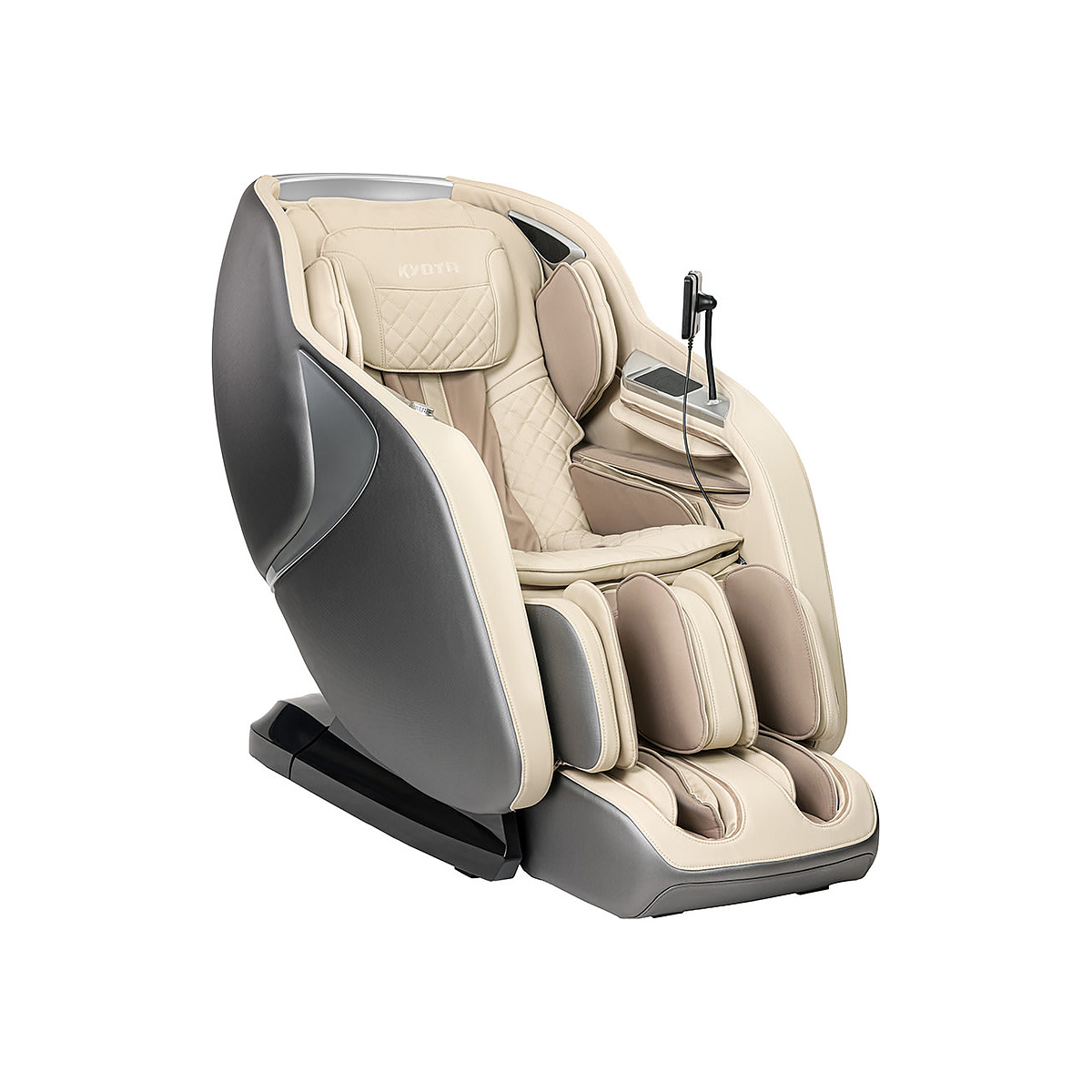
Kyota Joubu M880 4D Massage Chair
$8,499 $10,999
4DHeat
View details →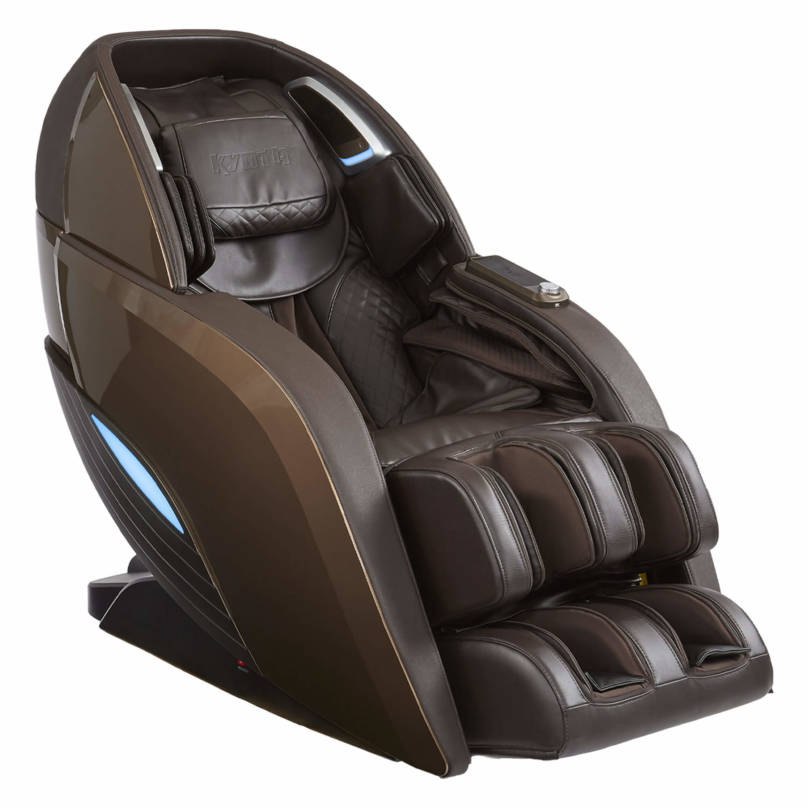
Kyota Yutaka M898 4D Massage Chair
$12,999
4DHeat
View details →Which one, for your specific problem
| If your priority is | Where we would point you |
|---|---|
The widest catalog in the category, and what it costs
Osaki's defining characteristic is scale: roughly a hundred and forty models across the group's brands, about forty-four under the Osaki name, from around thirteen hundred dollars upward. Nobody else publishes a catalog that wide.
Breadth genuinely helps a buyer. The cost tends to show up afterwards. The group entity is not BBB accredited and has twenty-six complaints closed over three years, sixteen of them in the service and repair category. Small sample, consistent distribution.
Individual franchise locations range from an A-plus rating to an F, which means there is no single Osaki experience; which store sold it to you may matter more than which chair you chose.
One more thing about Osaki
Osaki's three-year warranty is tiered, and its text does not commit to sending a technician to your home.
That is not the reason we wrote this page, but it is the kind of detail that surfaces after the money has moved rather than before.
What we would want in writing first
We sell one of these brands and not the other, so read this as a dealer's checklist rather than a neutral review.
- Ask which year covers what. Parts and labour in year one, parts in year two, frame only in year three is a very different offer from three years of coverage.
- Ask for an in-home service commitment in writing. Osaki's warranty text does not contain one.
- Ask which legal entity you are contracting with. There are at least three names in circulation behind this brand.
- Look up the BBB record of the specific store you are buying from, not the brand. Individual locations range from A-plus to F.
- If Japanese manufacture matters to you, check whether the model name contains JP. If it does not, do not assume it.
The part no comparison page can settle
Roller depth that reads as firm to one person reads as painful to another, and fit decides more than any specification on either side of this page. We can be straight about the asymmetry here: one of these brands you can sit in on Saratoga Avenue this week, the other you would be judging from a screen. In this category that is a worse way to buy, and it is worth saying even though it happens to favour us.
Ten minutes in the chair: what to check
- Shoulder alignment. The airbags should land on your shoulders, not your ears or your upper arms. This is the single most common fit failure and you feel it in the first thirty seconds.
- Neck roller height. Ask the chair to run its neck program. If the rollers sit below where it actually hurts, no amount of intensity will fix it.
- Back roller depth. Take it past the setting you think you want. A chair that feels perfect at maximum has no headroom on a bad day.
- Calf reach. Your calves should sit in the calf section, not above it. Taller users get caught here more than anywhere else.
- Foot rollers. Some people love them and some cannot tolerate them. Ten seconds tells you which one you are.
- Recline and return. How the chair comes out of zero gravity matters as much as how it goes in. A jerky return gets annoying by week three.
- Wall clearance. Ask how much space it needs fully reclined, then measure your room before you commit.
- Remote and controls. If you cannot start your favourite program in two taps, you will stop using it.
- Noise at full power. Quiet in the showroom is not the test. Run it hard and listen, especially if the chair will live in a shared room.
- Getting in and out. Try it the way you will at home: tired, at the end of the day, without thinking about it.
Frequently asked questions
Do you sell Osaki?
No. We are an authorized dealer for BodyFriend, Infinity, Kyota, Ceragem, Daiwa and Chanenn, and we service those brands ourselves. We wrote this because people ask us about Osaki, and a straight answer is more useful than pretending the brand does not exist.
Is Osaki a Japanese brand?
No. The entity behind the warranty is Titan Chair LLC, based in Carrollton, Texas, and retailer sources put roughly ninety percent of production in China. The models genuinely built in Japan carry JP in the name and are priced accordingly. Most chairs sold in America are Chinese-built, including some we sell, so this is about the name rather than the factory.
Why does Osaki have so many models?
Because breadth is the strategy. Around a hundred and forty models across the group, with fast turnover. That is genuinely useful when you have a fixed budget, and it is the reason a review of one Osaki tells you very little about another.
Would buying one online void the warranty?
Manufacturer coverage in this category runs through the authorized network whichever brand you pick, and a chair bought outside it often carries no enforceable US warranty no matter what the listing promises. Verify the seller's status before you pay, not after. Our warranty guide explains how the tiers work and which numbers actually matter.
Come and sit in the ones we do carry
The best comparison happens in the chair.
Both brands are on one floor in San Jose, plugged in, no appointment needed.